
Why Seed exists: bringing 35 years of sustainable building to you

Every business has an origin story. Seed's starts decades before the name existed – with a young builder learning his trade from someone who was already thinking about the future.
Learn about the origins of the business and the influence of architect, John Baird.
A mentor ahead of his time
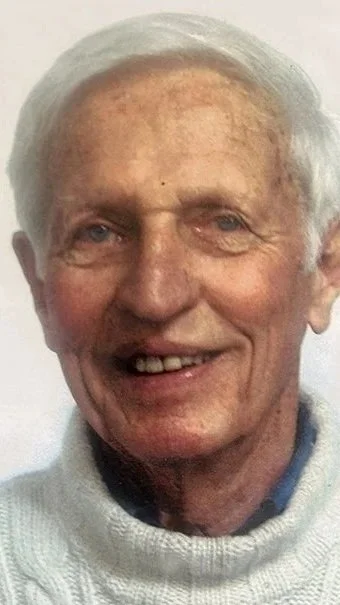
Early in his career, our Director, Paul Wainwright, was mentored by the late architect John Baird, founder of Fairweather Homes.
Baird spent the 1960s and 70s building a respected Melbourne architectural practice, then in the early 1980s turned his attention to something few builders were talking about at the time: energy-efficient kit homes.
While the rest of the industry focused on speed and standardisation, Baird was designing homes around orientation, ventilation and material choice – asking how a house could work with its site and its climate, not against them. It's the kind of thinking that later earned him a reputation as one of the pioneers of sustainable prefab housing in Australia.
For Paul, working alongside Baird wasn't just an early job. It was an education in a way of building that most of the industry hadn't caught up to yet.
Principles that became law
What's striking, looking back, is how much of what Baird taught has since become standard practice – and in many cases, building requirements, including:
north-facing orientation for passive heating
verandas and pergolas designed to manage seasonal sun
high levels of insulation
renewable, sustainably sourced timbers.
None of this was common sense at the time. It is now – largely because architects and builders like Baird spent years proving it worked.
Carrying the legacy forward
Paul didn't leave those lessons behind when Baird's era of homebuilding ended. He's spent the decades since applying them – refining them for contemporary sites, current materials and the way people actually want to live today.
That's really what Seed is: not a trend Paul has jumped on, but a continuation of principles he's believed in since the start of his career. When Seed talks about energy efficiency, natural materials or working with a site rather than against it, that's not marketing language. It's 35-plus years of practice.
Where modular homes fit in
It's worth noting that Baird's kit homes were, in essence, an early form of modular construction – components designed and built with precision, then assembled on site. The idea wasn't new for its own sake; it was a practical answer to building efficiently without compromising on quality or energy performance.
That thinking has only become more relevant. Modular homes today offer the same core advantages Baird was chasing decades ago – tighter quality control, faster build times, less material waste – now paired with materials and technology that make them more energy-efficient than ever.
For homeowners considering a second dwelling or granny flat, modular is often one of the smartest paths to a sustainable, well-built home. It's a natural fit with everything Seed stands for: not because it's trendy, but because Paul has watched this approach prove itself time and again over 35 years.
Why it matters for you
If you're planning a second dwelling, granny flat, modular home or small sustainable build, you're not just getting general building advice. You're getting the accumulated judgement of someone who learned from one of the people who helped write the playbook – and who has spent a career since making sure those principles actually get built, not just talked about.
